After the bees, the swallows

Bees Next up: swallows. Did you know that so few of these birds—the ones from the fairy tales of our childhood—remain in Hungary today? Their numbers have declined by 50% over the past few decades. What can we do to help them? Climate change, extreme weather events (sudden cold snaps) They are particularly sensitive, but the changes to our construction practices aren't helping them nest either. For example, there's no mud in the yard, or the new houses are being built without any gaps.

Besides producing our dried fruit products, why do we do this here at Csinta?

The swallow is an incredibly useful bird; each of these small, fork-tailed birds produces at least one kilogram of insects It feeds on (among other things) mosquitoes. Since one million of them have disappeared in recent years, there are that many kilograms more of insects. People in the old days held it in high regard; it’s no coincidence that it appears in countless nursery rhymes and songs—we even find people with the last name Fecske. Today, animals such as swallows and bats—which feed on insects—are valued even more highly, because of climate change more and more insects, some of which are pests species are appearing that were not previously native to the area. We’ve already heard a great deal about the harmful effects of mosquito control using chemical agents. The swallow, named “Bird of the Year” in 2010, is also suffering from the effects of chemical use. The population of barn swallows living in cities has declined significantly, even relative to the total swallow population; 64% of them have disappeared, presumably in connection with mosquito control. (I wonder why people didn’t have to deal with mosquitoes so much back then? 🙂 In villages, the barns built around the houses formed ‘protective zones’ against mosquitoes and flies, which ‘targeted’ the animals instead of the people. Swallows and bats also settled there, feasting on the insects.).

How can we help ensure the survival of our swallows?

It wasn’t common in the past, but today people often knock down swallows’ nests—which is actually prohibited, since swallows are a protected species. We should never do this. If you see anyone killing swallows, knocking down their nests, or putting up warning tape, you can warn them to stop. Anyone who realizes just how fragile the surviving domestic population is will prefer to use artificial breeding. Even we can also make – before the breeding season – made of plaster and sawdust, to welcome the barn swallows and house martins. Every single swallow is important to us, and fortunately, many people have already taken steps to protect them. There are even “swallow-friendly” towns now. In Nádudvar, for example, anyone can request three swallow nests.<3

A Few More Interesting Facts About Fork-tailed Mice

The destruction of nests is most commonly caused by barn swallows affects him, since heThey live in cities. We often see them flying low just before it rains. <3 It’s worth knowing that you can even report it to the authorities if these birds are being disturbed, if their nest-building is being prevented by various means, or if a finished nest is being wired shut. If you see a destroyed nest, please notify your local animal welfare organization to help save the chicks. A partygoers They burrow into sand walls; we can protect them by checking the sand piles at construction sites and the walls of sand quarries for nesting sites. If there are colonies, they are protected. They also use tarps to protect it At construction sites, we can take care to prevent sand martins from nesting in the building materials; if we’re working in such an area, we can keep this in mind. This species is the most endangered.
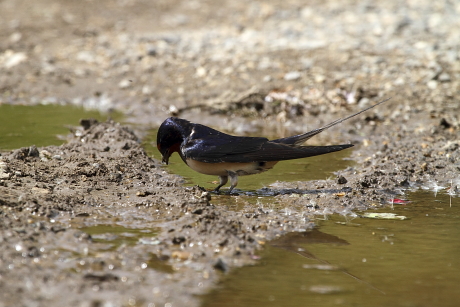
smoke swallow
smoke swallow (photo: Zoltán Orbán, mme.hu)
A smoke swallow The underlying problem is the decline in traditional livestock farming. But we can also look after their colony—if there is one—and protect it from disturbance. In Hungary, in addition, ruddy swallow It does show up, but it's extremely rare here. Let's take care of every little swallow, and don't forget to call the bird rescue team if we need help with this.<3 Did you know that the dried fruit Csinta is specifically eco-friendly? If you love nature, you've come to the right place.

csinta tale

A wonder-full

Grab yours!

Just fruit. No tricks. Try a taste of Csinta and make your day Csinta-chievous!

csinta tale

A wonder-full

Life is full of wonders; every morning the sun peeks over the horizon.

Our hair grows by itself.
When we look into each other's eyes, our hearts open up.

Our journey is also full of miracles, ordinary miracles.

When we started our company 20 years ago, it was a big unimaginable journey and we started by making small beeswax candles and went to the other side of the world.

Later, we brightened up the street, the children, and ourselves with colorful butterflies and spirals twirling in the wind, traveling to new places, blessed with new wonders and new children.

Settling down in Csobánka felt like a miracle. When I opened the window, I heard birds chirping, and there were mountains and greenery everywhere.

Once, we decided to try an experiment to see what it was like to ‚cook’ without actually cooking. To enjoy the natural flavors of vegetables, fruits, and seeds.

How we can make similar dishes that we know and love using completely different techniques, perhaps with different ingredients.Peter called it alchemy. Familiar dishes in new ways and new food ideas were brought to the table.It was very exciting to use almonds to make cottage cheese cream, avocados to make chocolate cream for cakes.

Inspired by my grandmother, we once made a big pie from plums.All plums, nothing else.It already looked good and it came together well.

We made the first Chinta from raw fruit, just by drying it, which of course was not called that yet, and we made it just to

Let's stuff it well with poppy seeds and turn it into a delicious bejgli-style pastry.

A few years later, when we were looking for new opportunities, the idea came up to share this wonderfully simple creation with our community. It was very well received at the Advent bazaar at our daughters Luca and Lilla’s school.

The children’s openness to new and natural things was a tremendous source of inspiration. That’s when Csinták’s journey began. A small kitchen, homegrown fruit, experiments in the “witch’s kitchen,” spices, fruits, dehydrators, and techniques (cooking methods).

Children, friends, Waldorf families have helped us, either consciously or unnoticed.Photography, enthusiasm, tables, painting, design, business ideas

lots of conversation Thousands of small and big ideas.

Then a new kitchen and new colleagues who are attentive and dedicated. Investment after investment… A new look designed by our favorite graphic designer, Ági, who had to get used to our slow decision-making, the many changes, and the fact that we don’t let things rest until we’re completely satisfied with the result.

And that's when I needed a name for what this tearable, chewable, fillable, flat, fruit-filled thing was.Flap, sheet, fruit roll-up funnel and then Laci said: 'FUN'.

And we said yes, it's cool 🙂 🙂