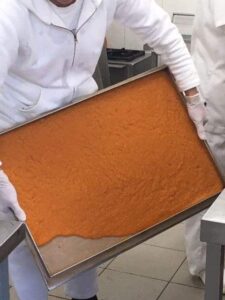
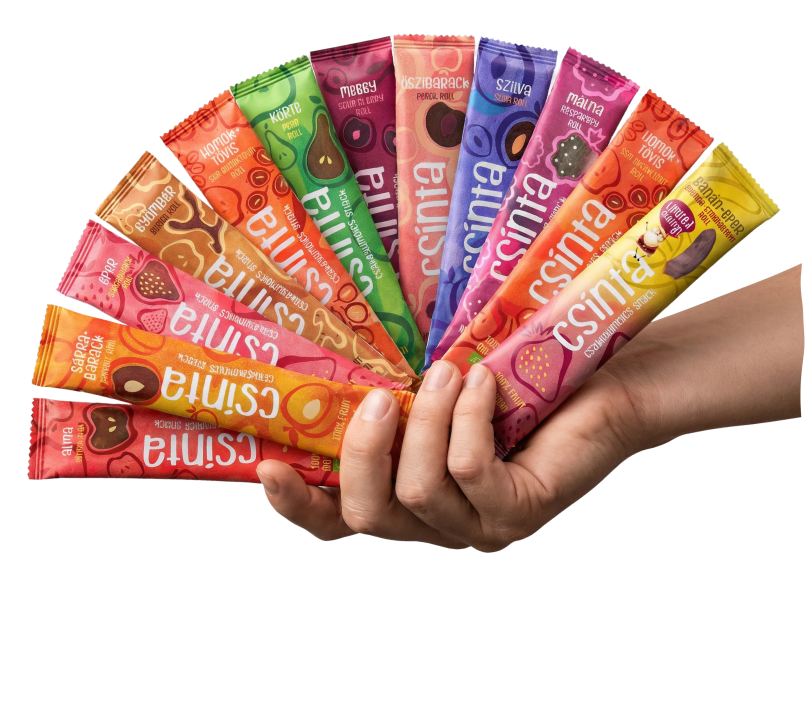
Since ancient times, ripe produce has been preserved by drying. This is actually a very simple and gentle method of preserving raw fruits and vegetables. Dried apples, plums, and figs retain a significant portion of the original fruit’s fiber and vitamin content, which was just as valuable as gold centuries ago during times of vitamin deficiency as it is today. These dried fruits form the basis of our dried fruit products.
How they used to dry things—which is exactly how we do it too
One advantage of this method of preservation, by the way, is that it doesn’t require the addition of extra sugar or other ingredients, as is the case with canning—which is good news for those following a diet. This practice has a long tradition all over the world, including here in Hungary. Incidentally, drying was done collectively in villages, just like, say, grinding corn. What is traditionally dried at home? A plum, alma, pear, rosehip, sour cherry, apricot, quince, cherry, peach are the most common. If we look around the world, and then the from pineapple starting with the on cranberries and on a date palm across the to the vineyard – raisins 🙂 – They preserved a lot of fruit this way. 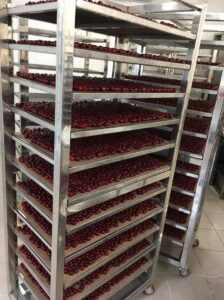
Even dried fruit that isn't very tasty is still tasty
There are what are known as “coarse” and “fine” dried fruits. This is by no means a classification based on quality, since the former variety is also quite tasty: these are the fruits on which the skin is left on and the pit is left inside. It is customary to dry pears this way—sometimes even whole—as well as plums and apples. Incidentally, dried plums are the only fruit that were almost always dried into coarse pieces. In the old days, the standard method for this was to use a bread oven: for example, apples cut into slices and intended for winter consumption were placed in the cleaned oven. In the case of delicate dried fruits—such as those produced by the At Csinta's Most importantly—we use only carefully selected, flawless, dried fruit, and our ingredients are sourced from the finest varieties. Just how important it is to us that the ingredients we use are of high quality, we've written about this before. In industrial settings, it is typically used as a bleaching agent, They use a soaking solution containing sodium bisulfite to make the apple chips a more attractive, lighter color. We do not use this in our workshop, just as we do not use chemical preservatives—this is how our finished Csinták products are suitable for inclusion in a healthy diet. In the traditional industrial, factory-style process, which we do not use, vegetables are generally treated with sulfur dioxide (E-220), sulfurous acid, or its salts (E-221–228), while fruits are treated with sugar added to the cooking water, which makes them last longer and look better than they actually are.
Getting back to the Csinta craft process:)
At Csinta, we take a slightly different approach to home drying. First, we make fruit sauce by pressing the fruit, and then we dry it using traditional methods. Thanks to this gentle, slow process, all the valuable nutrients and original flavors in concentrated form remains in the crop.