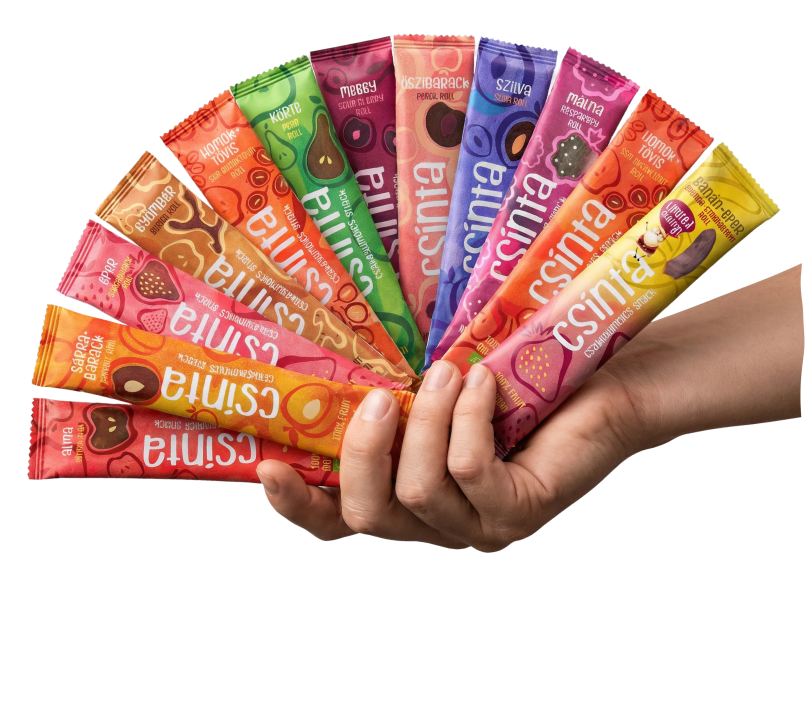
Here at Csinta, we work a lot with dried fruits, since we process many crates of organic fruit every day so that Csinta’s healthy products can reach as many places as possible, organic snack delicacies that delight young and old alike. We often search for, What might the new varieties be? – Going beyond traditional dried plums and dried apricots—we’re thinking about the packaging and improving the drying process, …to make Csinták—made from 100% Hungarian fruit—even more delicious. But let’s pause for a moment—after all, perhaps not everyone knows where the art and tradition of fruit drying actually originated! We can be certain that, in the beginning, it was a series of accidental discoveries that delighted our ancestors as they gathered dried fruit. When they could no longer find fresh fruit on the branches and wandered hungrily around the trees, looking at the many fruits that had fallen to the ground, they came across pieces of fruit that had rolled out of the shade and been dried by the sun. They sniffed at them warily and, after a cautious taste, munched on them with relish. From then on, this became part of their diet.
Back then, all the fruit was still organic : )
After that, they began to consciously experiment with natural methods of drying, building on their experiences. For 5,000 years, the peoples of the Middle East have been drying figs, dates, and apricots in the sun and on hot sand. In medieval Europe, apples were placed in a warm oven, peeled, cored, and hung on a string from the ceiling in the middle of the kitchen. Monks dried plums, apples, and grapes on stone floors covered with straw.
Dried plums and apples baked in a stove
In Mediterranean regions, fruit has been spread out on trays to dry in the sun, and in many places this practice continues to this day. In cooler regions, the heat from stoves or fires made it possible to dry plums, apricots, and apples. Later, increasingly sophisticated structures and systems were developed to refine these methods. Today, drying is carried out using all kinds of specialized machinery, electricity, solar collectors, and other modern technologies. In the past, especially during the warmer seasons or in certain climates, dried fruits played a very important role in the diet, because by preserving them through drying, people could store them for much longer periods to last through times of scarcity. Of course, this remains an important consideration even today, although many other preservation methods—such as freezing or cooking—are now available. A major advantage of dried fruits—and, of course, Csinták—especially when dried at low temperatures, is that the fruits retain their aroma and intense flavor, along with most of the nutrients found in the raw fruit. The organic snack Csinták also became part of this long history when they appeared on the market, continuing this old tradition—yet in a new form: fruit rolls. And when we began offering samples, we often heard people reminiscing about the past:
“Oh, the last time I ate something like this was at my grandmother’s…”
We dry the Csinták at low temperatures using a gentle process over a long period of time to preserve the fruit’s original flavor and ensure that none of its naturally occurring essential nutrients are lost. If you haven’t had a chance to try the Csinta's Handcrafted Organic Dried Snacks, now you can. We recommend the following packages—a selection of our best Csintás. Just a few clicks, and let's send it 🙂